
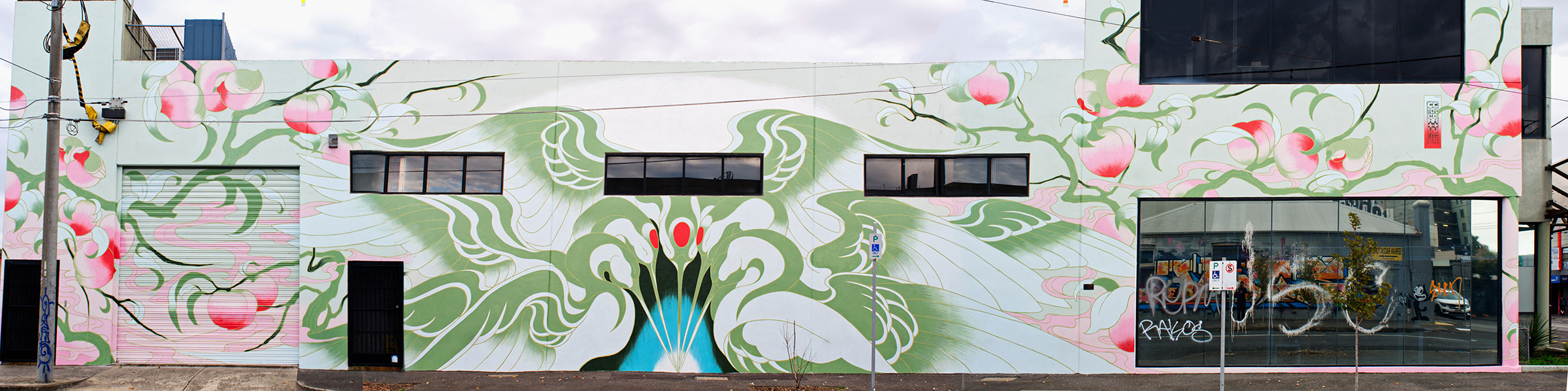
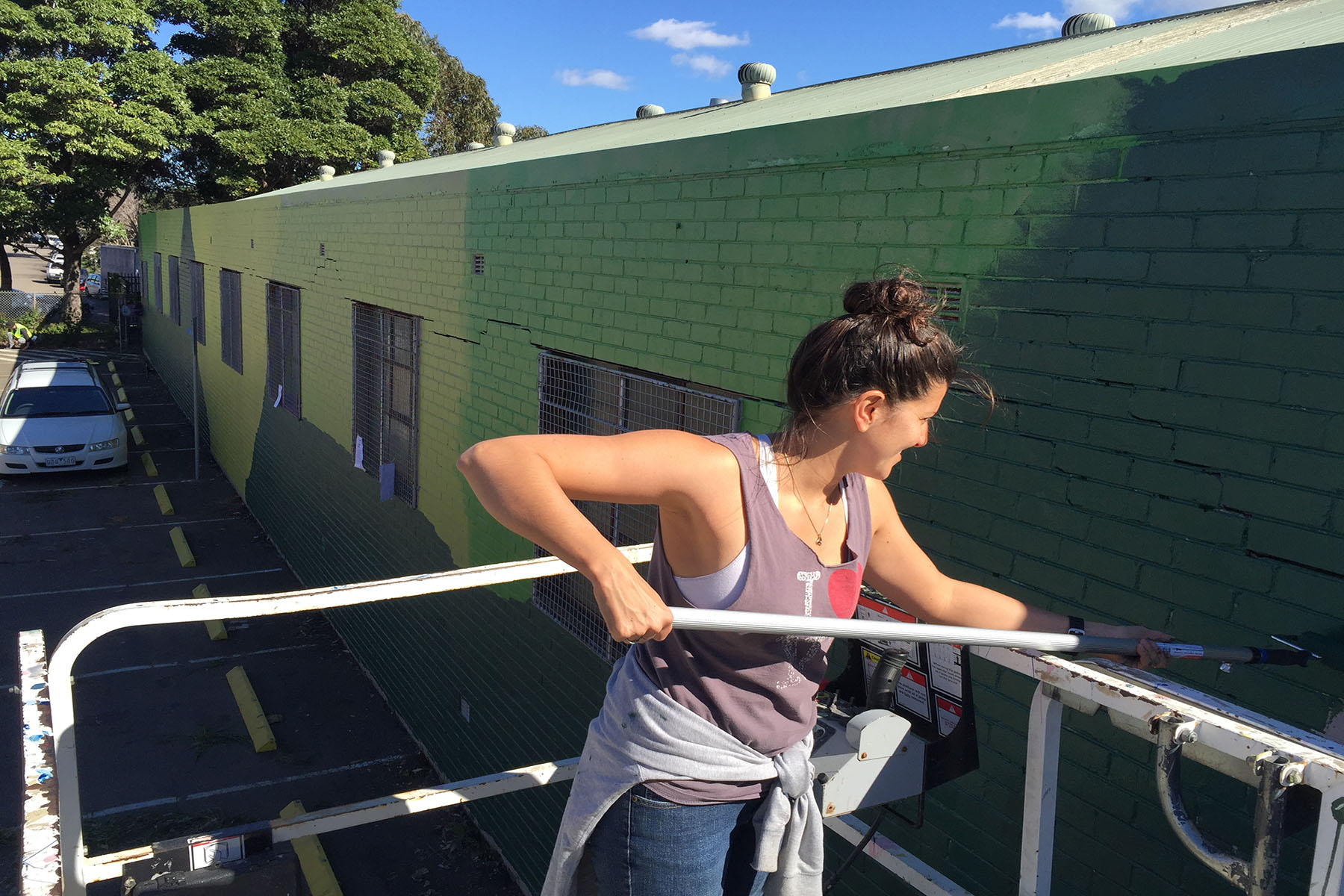
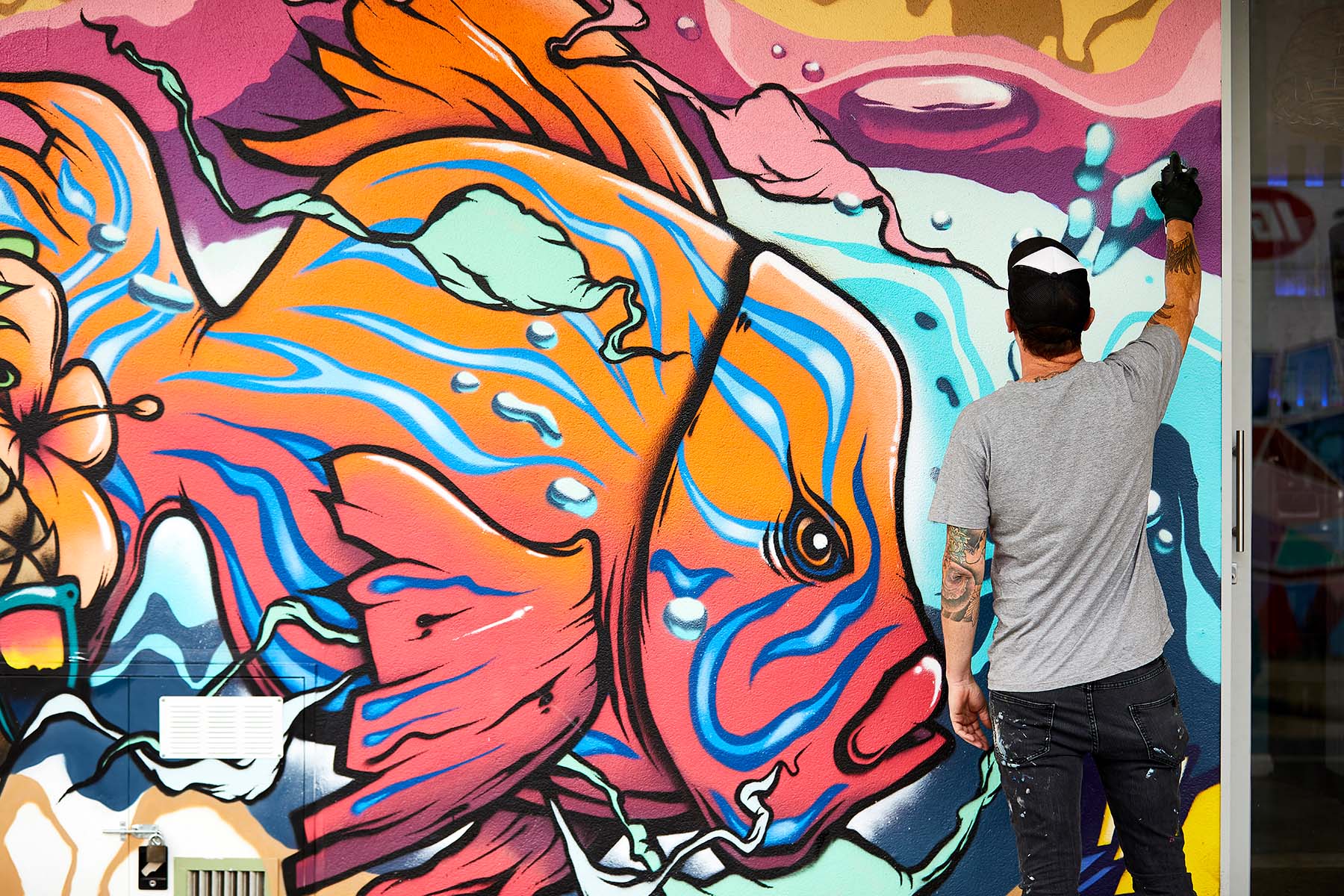
Mural by Creature Creature, commissioned through Merri-bek City Council's 2024-25 mural program, curated by 90 Degrees Art.
Some councils and government authorities respond to graffiti like it's a compliance problem. They cover up tagging, apply anti-graffiti coatings, increase patrols, repeat. All these approaches do is address the symptom.
If you don't understand the culture of graffiti, you're already fighting a losing battle. You need to know why it exists in a place, what it means to the people making it, and the kinds of ways you could consider managing it without exacerbating the issue.
Before Dan became a practicing commissioned mural artist, graffiti was his life. He has been part of Melbourne's graffiti scene for over 30 years. Dan shares his inside knowledge with councils, businesses and government to help people better understand graffiti culture in the hope that with that knowledge they can develop more long lived strategies to combat vandalism.
We also wear other hats in the advisory and consulting space. In the past we have curated mural programs and graffiti jams for council projects and developed strategy and planning documentation for street artist engagement and mural costing recommendations.
Most recently, Helainie curated and managed Merri-bek City Council's annual mural program in 2024-25, from artist engagement and wall sourcing to permissions, budget allocation recommendations, design oversight and stakeholder coordination. Artists engaged for the program included Jess Kease (23rd Key), Jaycob Campbell (Gonketa), Creature Creature and Tyson Savanah (Father Marker).
If you're working through a graffiti mitigation strategy, planning a public art program, or looking for someone who can advise on mural costing and the artist engagement process, book a free consultation and we'll talk through what you need and how we might be able to help.
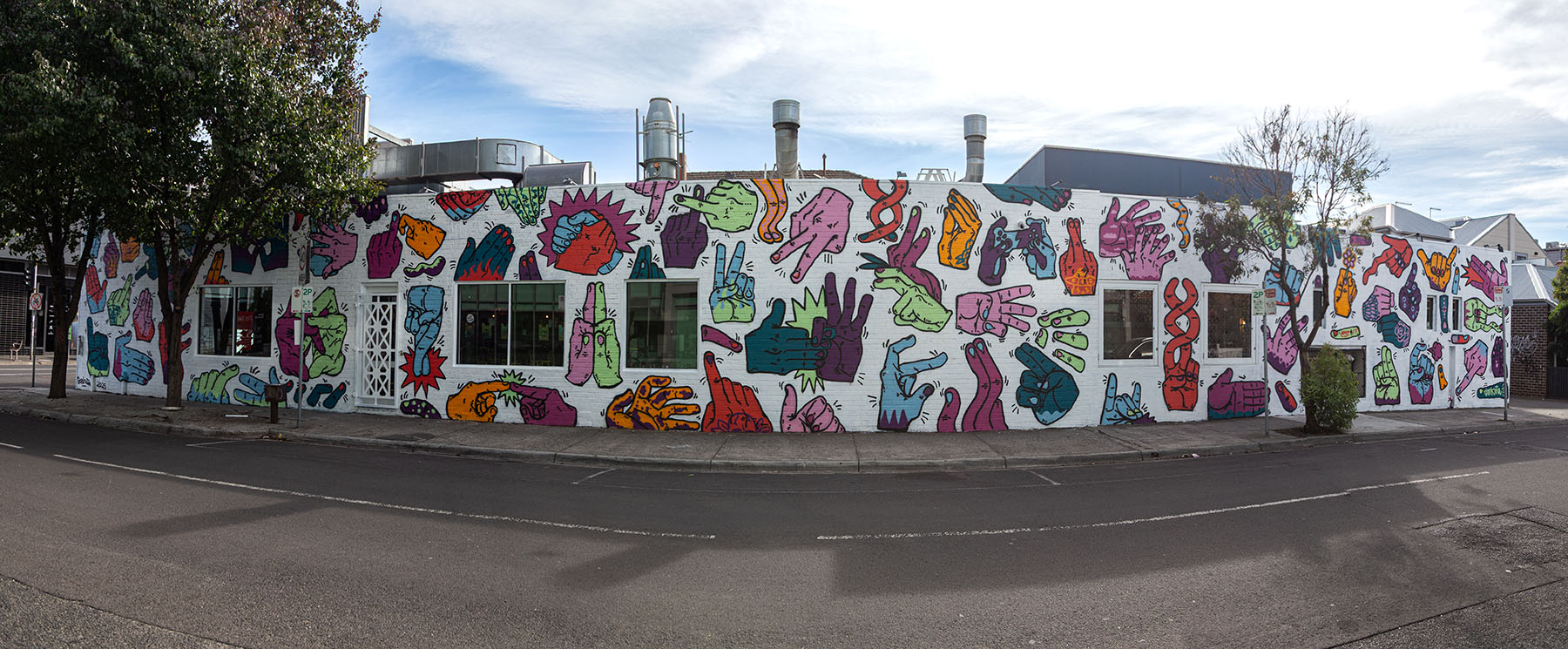
Mural by Jaycob Campbell (Gonketa), commissioned through Merri-bek City Council's 2024-25 mural program, curated by 90 Degrees Art.
WE ARE 90 DEGREES
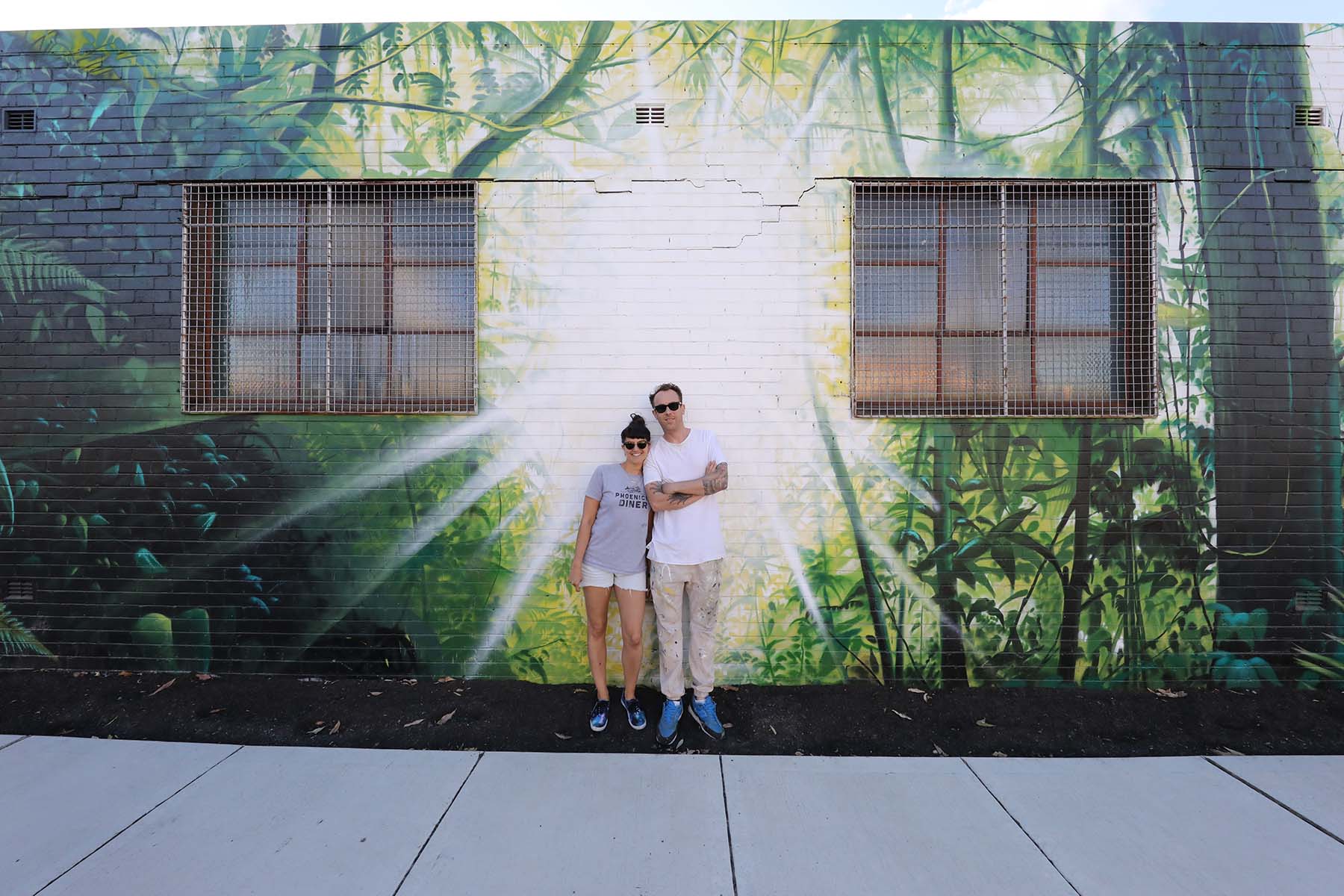
One artist - Dan. One project manager - Helainie. Together we create murals that make spaces better. We think our work speaks for itself. It's what we're known for. It's what we love doing. We've been in business since 2012. And Dan's been painting his whole life.
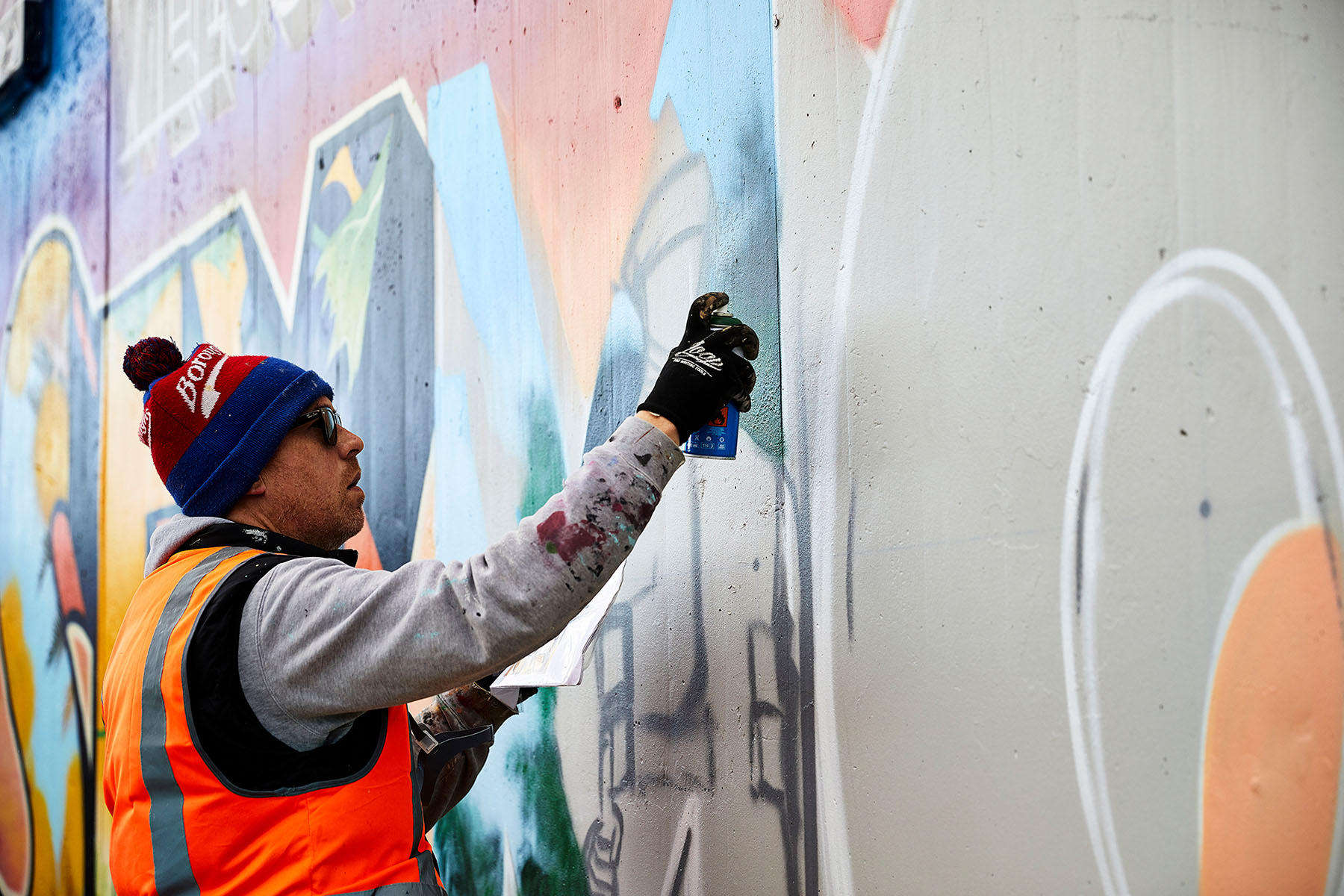

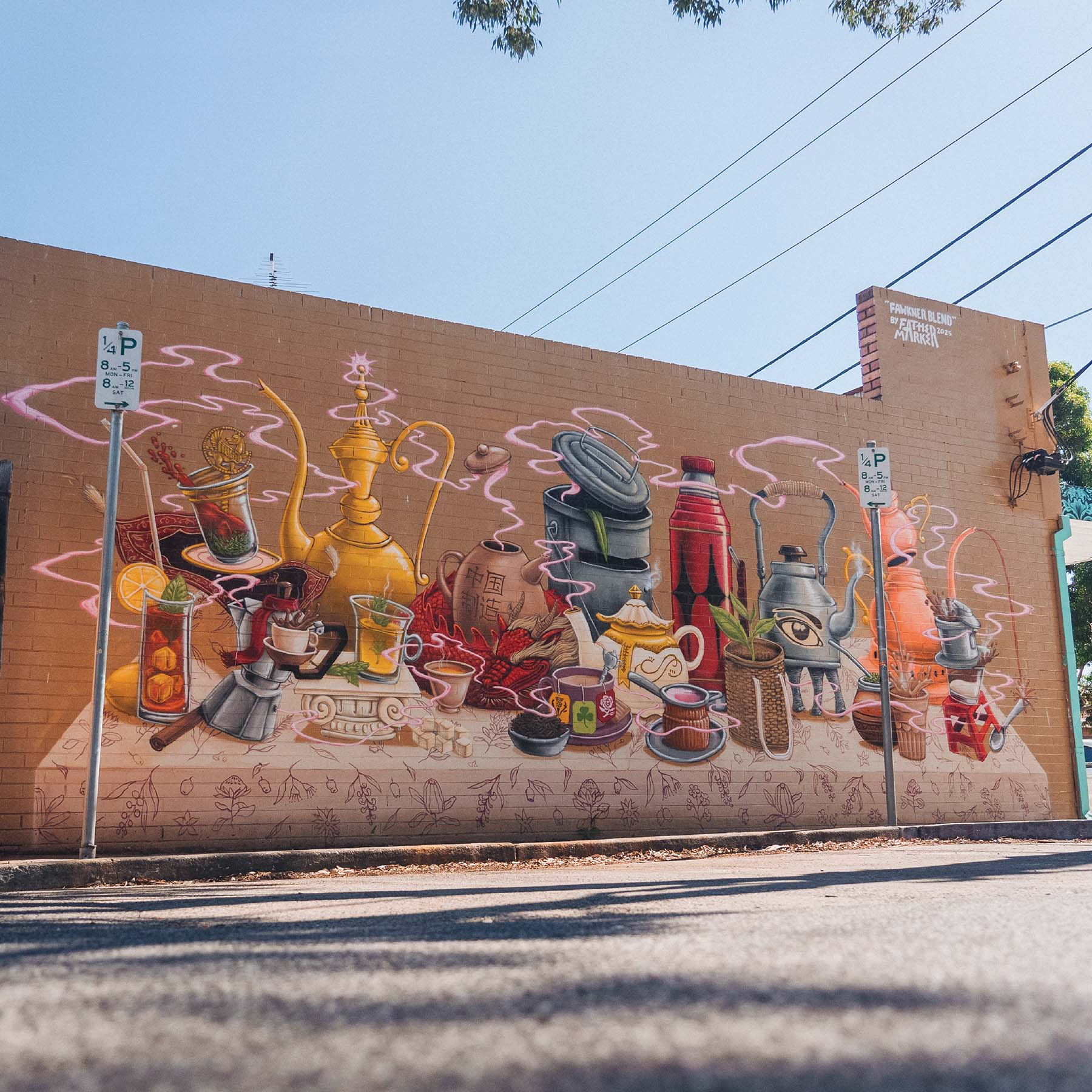
Mural by Tyson Savannah (Father Marker), commissioned through Merri-bek City Council's 2024-25 mural program, curated by 90 Degrees Art.
Some things you may be wondering.
How should I manage a graffiti problem?
There's no single right approach. Effective graffiti management depends on the location, the type of vandalism, the people doing it, the local cultural context and the community. Standard responses like rapid removal, anti-graffiti coatings and increased patrols can help reduce surface-level impact, but on their own they rarely change long-term behaviour. Also a freshly painted wall is just a nice new canvas for another graffiti writer. A more lasting approach requires a real understanding of why graffiti happens in a place and what kinds of responses can deter or garner respect from the vandals. We help councils, businesses and government work through that thinking, and develop long-lasting strategies rather than having to address the same problem every few months.
How can councils learn about graffiti to better manage it?
The most useful starting point is talking to someone who's spent time inside the culture. Books, policy documents and academic papers can help, but they're limited because graffiti evolves quickly, varies between cities, and rarely fits the categories outsiders impose on it. People who take the time to understand the local scene, why it exists, who's involved, what the rules are and how things change over time, are in a much stronger position to develop responses that actually work. Finding a legitimate graffiti artist to speak with is difficult - as a sub-culture, active writers make an effort not to be seen. Drawing on Dan's 30+ years inside Melbourne's graffiti scene, we work with councils, government departments and policy makers to share that knowledge in workshops, briefings or strategy sessions.
What are the most common mistakes when dealing with vandalism?
The biggest one is treating vandalism as a single problem with a single fix. Tagging on a residential fence, deliberate damage to a public building and a piece on a freight train are three completely different things, made by different people, for different reasons. They need different responses. Rapid removal works in some contexts and accelerates the problem in others. Anti-graffiti coatings protect surfaces but usually need to be reapplied after every cleaning. Commissioning a "cover-up mural" without understanding the local culture often results in the mural itself being defaced. The most common mistake is acting before understanding, then repeating the same response when it doesn't work.
How do you curate a mural program?
Curating a mural program is more involved than most people expect. It starts with understanding the goals: are you trying to deter tagging, activate a precinct, celebrate cultural identity, build community pride, or all of the above? Each goal shifts the brief, the artist selection and the locations. From there it's about sourcing walls (which usually means negotiating with private property owners, not just councils), securing permissions and approvals, developing artist briefs, engaging the right artists for the work and the budget, design oversight, contracts and insurance, understanding safety obligations and assessments, arranging access hire and permits, artist payments, on-site coordination, community engagement, maintenance plans and final artwork completion. We've done this at scale for Merri-bek City Council and can scope a program for your local government area, business district or precinct.
Can you advise on public art procurement and artist engagement?
Yes. We advise councils, government departments and developers on public art procurement processes including brief development, EOI and tender frameworks, artist selection criteria, fee benchmarking, scope of services, contracts, insurance and safety requirements and acquittal. Artist engagement is its own area of expertise: knowing which artists are right for which briefs, how to approach them, fair pay, and how to support a productive working relationship from brief to handover. Most public art projects that go wrong do so because the procurement process wasn't built around how artists actually work. We help structure it from the start to ensure the best possible outcome for the artwork, the artist and the client.
Do you work with schools and education organisations on graffiti and street art education?
Yes. We work with primary and secondary schools, flexible learning centres, alternative learning settings and community education organisations on programs ranging from one-off incursions to multi-week mural projects with students. Programs are designed around the cohort, the curriculum goals and the school's planning cycle. For VCE Vocational Major students, our programs map naturally to Personal Development Skills and Work Related Skills, particularly the extended community project component. Full detail on what's on offer is on our school programs page.
How much does consultancy and advisory cost?
It depends on the scope. Smaller pieces of work like a one-off strategy briefing or a cultural orientation session for council staff can be quoted as a fixed project fee. Larger engagements like running a full mural program, developing a graffiti management strategy or providing ongoing procurement advisory can be quoted as a project, a retainer or an hourly rate, depending on what suits the client and the work. The best way to scope it accurately is a free 30-minute consultation where we can talk through what you need and provide a clear quote upfront.
What should a public mural cost?
There's no single answer. A public mural can range from a few thousand dollars for a small community piece to hundreds of thousands for a large-scale commission, and the right cost depends on a long list of variables. Wall size and complexity, surface preparation, the artist's profile and experience, design development time, materials, access equipment, traffic management, community engagement, documentation, insurance and contingency all play a part. We help councils, developers and program managers think through the variables, benchmark against comparable projects, and structure appropriate budgets to service an entire program rather than just one wall.
Instagram.

Free consultation
Let's chat about how to make your space better in a free 30-minute online consultation. Inspiration plus answers.
Book a free consultation
Get in touch
Ready for a quote? Want to book a corporate workshop? Just want to say hi? We'd love to hear from you.
Get in touch